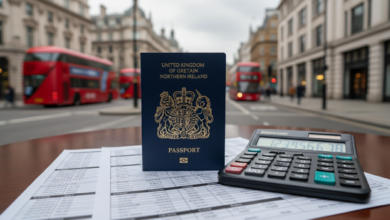
Navigating the Tax Maze: A Comprehensive Guide to Double Taxation for US Expats in the UK

Moving across the pond from the United States to the United Kingdom is an adventure filled with cultural shifts, from mastering the nuances of ‘rubbish’ versus ‘trash’ to learning the delicate art of the Sunday roast. However, beneath the charm of cobblestone streets and rainy afternoons lies a complex reality that every American expat must face: the intricate web of international taxation. Unlike almost every other nation, the United States taxes its citizens based on citizenship rather than residence. This means that if you are a US citizen living in London, Manchester, or the Scottish Highlands, Uncle Sam still expects a call every April. This guide explores how to navigate the potential pitfalls of double taxation while ensuring you remain compliant with both the Internal Revenue Service (IRS) and His Majesty’s Revenue and Customs (HMRC).
The Golden Rule: The US-UK Tax Treaty





The first thing to understand is that you are not necessarily going to be taxed twice on every dollar you earn. The US and the UK have a long-standing tax treaty designed specifically to prevent double taxation. This treaty acts as a blueprint, determining which country has the primary taxing rights over different types of income. While the ‘Savings Clause’ in the treaty technically allows the US to tax its citizens as if the treaty didn’t exist, various provisions provide relief that effectively keeps your tax bill manageable. It’s a bit of a legal dance, but the treaty is your primary shield against paying full rates to both governments.
FEIE vs. FTC: Your Two Best Friends
When it comes to filing your US taxes from the UK, you generally have two primary tools to avoid double taxation: the Foreign Earned Income Exclusion (FEIE) and the Foreign Tax Credit (FTC).
The FEIE allows you to exclude a certain amount of your foreign earnings from US taxation—roughly $120,000 (adjusted annually for inflation). If you earn less than this and meet certain residency requirements, your US tax liability could drop to zero. However, there is a catch: you cannot use this exclusion on passive income like dividends or rental income.
On the other hand, the Foreign Tax Credit (FTC) is often the more popular choice for expats in the UK. Since UK income tax rates are generally higher than US rates, the FTC allows you to claim a dollar-for-dollar credit on the taxes you’ve already paid to HMRC. In many cases, this not only wipes out your US tax liability but also allows you to carry forward excess credits to future years. Choosing between the two requires a bit of math and foresight, as your choice can impact your ability to contribute to an IRA or claim certain child tax credits.
[IMAGE_PROMPT: A professional home office setting in a London apartment, showing a laptop with tax software open, a calculator, and documents with US and UK flags on a mahogany desk, with the Big Ben visible through a rainy window in the background.]
The Statutory Residence Test and HMRC
While you’re keeping an eye on the IRS, you can’t forget about HMRC. The UK determines your tax status through the Statutory Residence Test (SRT). This isn’t just about where you live; it involves a series of ‘ties’ to the UK and the number of days you spend in the country. Once you are deemed a UK resident, you are generally taxed on your worldwide income.
One unique aspect of the UK system is the ‘remittance basis’ of taxation, which is available to non-domiciled individuals (often referred to as ‘non-doms’). This can be a significant advantage, allowing you to avoid UK tax on foreign income as long as you don’t bring that money into the UK. However, recent and upcoming changes to UK tax law regarding non-dom status mean that this strategy requires very careful, up-to-date professional advice.
The Pitfalls of ISAs and PFICs
If you are a US expat, you must be extremely cautious with UK-specific investment vehicles. The Individual Savings Account (ISA) is a beloved tax-free wrapper for UK residents. To HMRC, it’s a great way to save. To the IRS, however, an ISA is not recognized as tax-exempt. You will still owe US tax on the interest, dividends, and capital gains generated within an ISA.
Even more dangerous are PFICs (Passive Foreign Investment Companies). Most UK mutual funds and ETFs are classified as PFICs by the IRS. The reporting requirements for these are incredibly onerous, and the tax rates can be punitive, reaching over 50% in some scenarios. For most US expats, it is often simpler—and cheaper—to keep your investment portfolio in US-based brokerage accounts that are compliant with US reporting standards.
Pensions: The Silver Lining
Thankfully, the tax treaty provides excellent protection for retirement savings. Most UK employer-sponsored pensions are recognized by the IRS, meaning contributions are often tax-deductible or excludable, and the growth remains tax-deferred until you start taking distributions. Similarly, the treaty protects US Social Security and UK State Pension payments from being double-taxed, usually making them taxable only in the country where you reside at the time of receipt.
Reporting Requirements: FBAR and FATCA
Beyond just paying tax, the US government requires a significant amount of paperwork regarding your foreign assets. The Foreign Bank Account Report (FBAR) must be filed if the total value of all your foreign accounts exceeds $10,000 at any point during the calendar year. Additionally, the Foreign Account Tax Compliance Act (FATCA) requires reporting of specified foreign financial assets if they exceed certain thresholds.
The penalties for failing to file these forms are famously high, often starting at $10,000 per violation, even if it was an honest mistake. This makes record-keeping and timely filing absolutely essential for any American living in the UK.
Conclusion: The Value of Professional Guidance
Navigating the intersection of US and UK tax laws is not a DIY project for the faint of heart. While the concepts of credits and exclusions seem straightforward, the devil is in the details—currency conversions, differing tax years (the UK tax year ends April 5th, while the US uses the calendar year), and complex treaty claims.
If you are an expat, the best investment you can make is a qualified cross-border tax advisor. They can help you optimize your tax position, ensure you don’t overpay, and, most importantly, give you the peace of mind to enjoy your life in the UK without worrying about a surprise audit from across the ocean. After all, you moved to the UK to experience a new culture, not to spend all your weekends arguing with spreadsheets.