The Global Founder’s Playbook: Navigating UK Company Formation for Foreign Entrepreneurs

#
Introduction: Why the UK is Calling Your Name




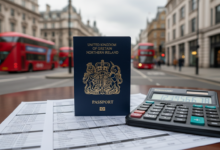

Starting a business is a monumental leap of faith, but choosing the right soil to plant your seeds is just as critical as the idea itself. For many foreign entrepreneurs, the United Kingdom represents more than just a cluster of islands in the North Atlantic; it is a global beacon of commerce, innovation, and legal stability. Whether you are a tech visionary from Silicon Valley, a manufacturing expert from Southeast Asia, or a consultant from the EU, the UK offers a streamlined, prestigious, and surprisingly accessible pathway to global markets.
In this guide, we will break down the ‘how’ and ‘why’ of UK company formation, stripping away the legal jargon to give you a clear, actionable roadmap to setting up your British entity without ever needing to board a flight to Heathrow.
The Magnetic Pull of the British Market
Before we dive into the paperwork, let’s talk strategy. Why choose the UK? Firstly, the prestige of a ‘Limited’ (Ltd) suffix is recognized globally. It signals that your business operates under one of the world’s most respected legal frameworks. Secondly, the UK boasts one of the lowest corporation tax rates in the G7 and a massive network of double taxation treaties, ensuring you aren’t paying the taxman twice on the same pound.
Moreover, the ease of doing business here is legendary. While some European neighbors might require weeks of notary visits and physical presence, the UK allows you to incorporate a company in as little as 24 hours—entirely online. It’s business at the speed of the internet, tailored for the modern digital nomad.
Choosing Your Vessel: The Limited Company
For 99% of foreign entrepreneurs, the ‘Private Company Limited by Shares’ is the gold standard. Why? Because it creates a ‘legal person’ separate from you. If the business hits a rough patch, your personal assets—your home, your car, your vintage watch collection—are generally protected.
There is also the Limited Liability Partnership (LLP), often used by law firms or accountancy practices, but for scalability and ease of investment, the ‘Ltd’ structure is almost always the better choice. It allows you to issue shares, bring in investors, and eventually, if you dream big enough, list on a stock exchange.
[IMAGE_PROMPT: A diverse group of professional entrepreneurs sitting around a modern glass table in a London skyscraper office, with the Shard visible through the window, looking at a digital tablet displaying business registration documents.]
The Non-Negotiable Checklist
To get started, you don’t need a British passport, but you do need a few key components. Here is what you must have ready:
1. A Unique Company Name: It can’t be ‘too similar’ to existing names. Avoid anything offensive or implying a connection to the Royal Family unless you actually have their blessing (which, let’s be honest, you probably don’t).
2. The Registered Office Address: This must be a physical address in the UK. It doesn’t have to be your actual office—many entrepreneurs use a ‘virtual office’ service that forwards mail. This address will be on the public record, so using your home address (even if you lived in the UK) is usually discouraged for privacy reasons.
3. Directors and Shareholders: You need at least one director (the person running the show) and one shareholder (the person who owns the show). They can be the same person. Crucially, they do not need to be UK residents.
4. SIC Codes: These are Standard Industrial Classification codes that tell the government what your business actually does (e.g., ‘62012 – Business and domestic software development’).
The Three-Step Incorporation Dance
Once you have your checklist, the process is surprisingly rhythmic.
Step 1: The Memorandum and Articles of Association. These are your company’s ‘rule books.’ Most people use the ‘model articles’ provided by the government, which are pre-written and legally sound for most standard businesses.
Step 2: Filing with Companies House. This is the UK’s registrar of companies. You can do this via a professional formation agent (highly recommended for non-residents) or directly through the government website. The fee is minimal—usually less than the cost of a fancy dinner in London.
Step 3: The PSC Register. You must identify your ‘Persons with Significant Control.’ This is part of the UK’s commitment to transparency, ensuring the authorities know who is actually pulling the strings behind the corporate veil.
The Banking Hurdle: The Real Challenge
If incorporating is a sprint, opening a business bank account is a bit of a hurdle race. Traditional UK banks (the ‘High Street’ names) can be quite conservative. They often require the director to be a UK resident or to visit a branch in person for a ‘Know Your Customer’ (KYC) interview.
Don’t let this discourage you. The rise of ‘Neobanks’ and digital-first financial institutions like Tide, Revolut Business, or Wise has changed the game. These platforms are much more friendly to foreign directors and allow for multi-currency accounts, which is perfect for an international entrepreneur managing a global supply chain.
Tax and Compliance: Keeping the Peace
Once your company is live, you have two best friends you need to keep happy: Companies House and HMRC (the tax office).
Every year, you must file a Confirmation Statement, which is essentially a ‘snapshot’ confirming your company details are still correct. You also need to file Annual Accounts. On the tax side, you’ll be dealing with Corporation Tax. If your UK turnover exceeds £90,000, you must also register for VAT (Value Added Tax).
While this sounds daunting, the UK’s digital infrastructure (like the ‘Making Tax Digital’ initiative) means most of this can be handled via software. Hiring a UK-based accountant for a few hours a month is a wise investment to ensure you stay compliant while you focus on growth.
Conclusion: Your British Legacy Starts Here
Setting up a UK company as a foreign entrepreneur is no longer a privilege reserved for the ultra-wealthy or the politically connected. It is a strategic move for anyone who wants to tap into a stable, prestigious, and tech-savvy market.
By following the rules, choosing the right partners, and staying on top of your filings, the UK can serve as the perfect launchpad for your global ambitions. The tea is optional, but the opportunity is very real. Are you ready to make your mark on the British business landscape?